



Beyond the drive

A carbon-negative crop that can contribute to the mitigation of climate change, algae are also a viable source of biofuel. Working with Hiroshima University, Mazda is making significant inroads into its future use.

Words: Louise George Kittaka

Seaweed is synonymous with Japanese cuisine and has been cultivated since organised farming began in Edo Bay in the mid-17th century. It is also the focus of climate-change-enforced innovation, as farmers look to cross-pollinate varieties to create new crops more resilient to rising sea temperatures.  

Seaweeds and other algae can be grown without the need for pesticides and fertilisers, and do not cause any major physical change to the environment. Moreover, they can play an important role in fighting climate change by absorbing carbon emissions and regenerating marine ecosystems. They are also developing a reputation as a sustainable and eco-friendly resource for biofuel production.

Seen from above, this mozuku seaweed farm is located between the islands of Yanaha and Izena, in the south of Japan.

Biofuels are liquid fuels produced from renewable biological resources, such as plants and algae, and offer low-carbon solutions for the transportation sector. Offering a significant advantage as a biofuel over other crops – including soybeans and palm oil for biodiesel, and sugarcane and corn for ethanol – algae can grow in both fresh water and seawater, and its cultivation does not displace farmland used for producing food. Attention is turning to microalgae – microscopic algae invisible to the naked eye – with a species known as Nannochloropsis now at the forefront of biofuel research. In cooperation with Hiroshima University, Mazda is employing cutting-edge technology to develop high-quality oil from Nannochloropsis, with a view to using it as a substitute for fossil fuels in future Mazda vehicles.

A Fruitful Partnership

Mazda and Hiroshima University enjoy a symbiotic relationship, since Mazda is headquartered in Hiroshima prefecture and many of its employees are graduates of the university. A joint research course in next-generation automotive technology was established in 2015, paving the way for the current work on microalgae as a biofuel.

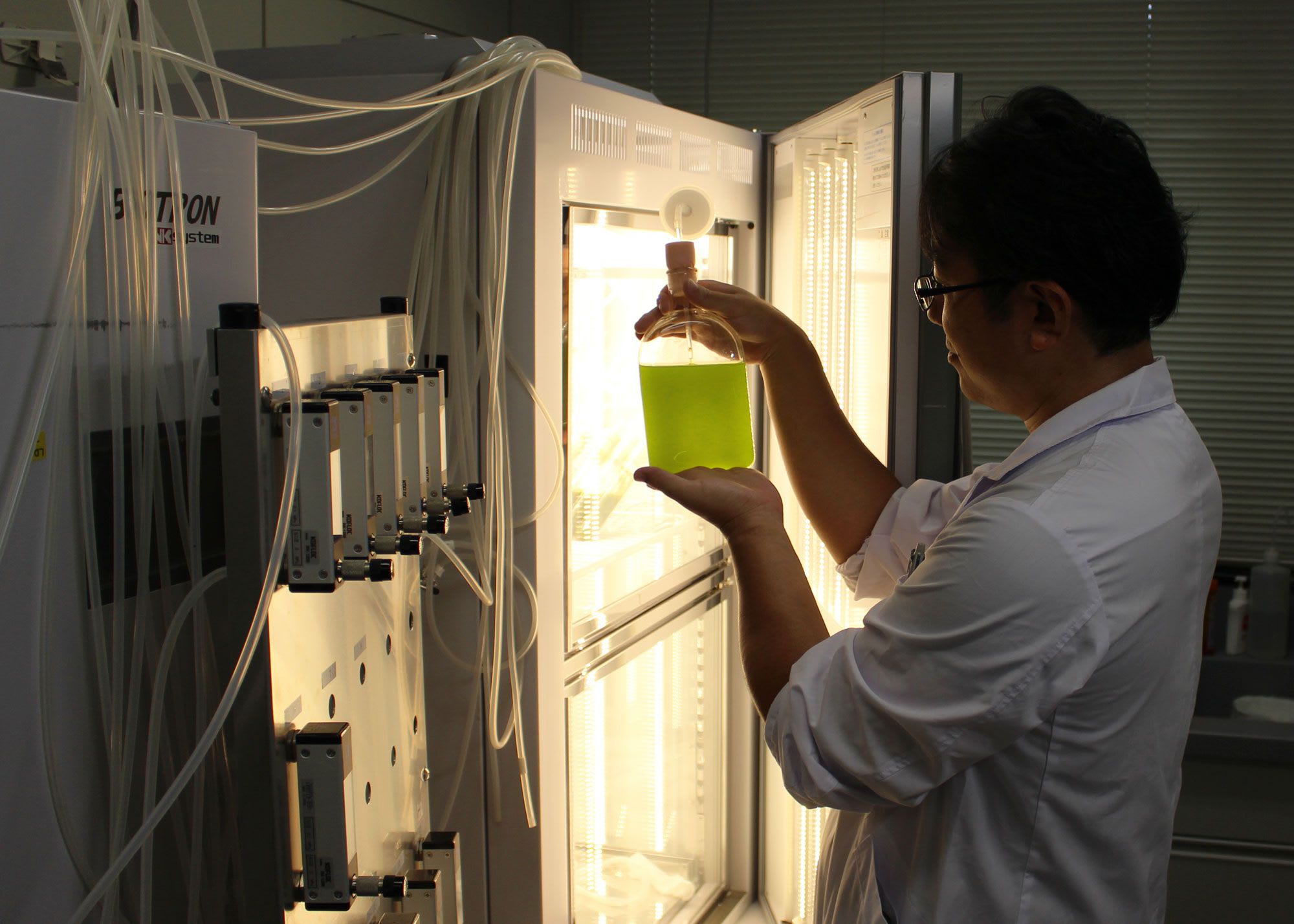
Scientist holding a bottle of oil in a lab
“The oils produced by Nannochloropsis can be easily converted to biodiesel.”
PROFESSOR ATSUSHI SAKAMOTO, GRADUATE SCHOOL OF INTEGRATED SCIENCES FOR LIFE, HIROSHIMA UNIVERSITY


The team was one of the first to successfully apply genome editing to Nannochloropsis, which allows researchers to alter the DNA of an organism. This algae grows rapidly and can produce a large amount of lipids – naturally occurring fats – making it ideal for biofuel production.

“The oils produced by Nannochloropsis can be easily converted to biodiesel, a fuel which is compatible with most engines in Mazda vehicles,” explains Professor Atsushi Sakamoto of the Graduate School of Integrated Sciences for Life at Hiroshima University. “That being said, there are still several major issues to tackle before this kind of biofuel can be put into practical use at a competitive cost.”

Seaweed icon

HARVEST

Algae, such as Nannochloropsis, can be grown in fresh water and seawater, making it a viable resource for renewable biofuel production.

Beaker flask icon

DEVELOP

Using genome-editing technology, scientists can alter the DNA of Nannochloropsis to make it more suitable for biofuel.

Alloy wheel icon

FUEL

Mazda has already been experimenting with biofuel at the race track, with the Mazda2 Bio Concept on the Fuji International Speedway.

Japan is a relatively small country with limited natural resources. Sakamoto notes that it is important for Japan to come up with multiple solutions to reduce CO₂ emissions and to establish systems whereby this technology can be implemented and combined in an optimal fashion.

In turn, this technology also has the potential to play a significant role on the world stage. “Our joint research with Mazda offers an important solution for CO₂ reduction: It tackles the difficult challenge of achieving carbon neutrality while continuing to make use of the internal combustion engine and its infrastructure – which are used in every corner of the globe,” Sakamoto says.

White Mazda CX-5 SUV driving next to a lake

“OUR JOINT RESEARCH WITH MAZDA OFFERS AN IMPORTANT SOLUTION FOR CO₂ REDUCTION.”

PROFESSOR ATSUSHI SAKAMOTO, GRADUATE SCHOOL OF INTEGRATED SCIENCES FOR LIFE, HIROSHIMA UNIVERSITY

Find out more

BUILDING SUSTAINABILITY


Some images may depict overseas models or include optional features and accessories not available locally.